You can build your trip to the Marche region around the dining table. It begins by the sea in Senigallia, then—just a few kilometers away—leads to rolling hills, villages, wineries, and olive oil mills. And, above all, to flavors that tell a centuries-old story.
In this article, we want to suggest the best stops—to be enjoyed at a leisurely pace, one forkful at a time.
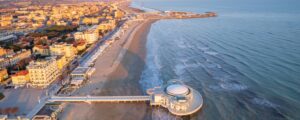
First stop: Senigallia, between the sea and tradition.
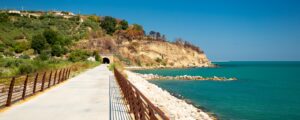
The starting point has to be Senigallia, with its fish stews, grilled seafood, and fried dishes—flavors that evoke the Adriatic and leisurely days. It is easy to begin to understand the cuisine of the Marche region: grounded, tied to the land, and built on simple yet distinctive ingredients.
And then there is always the *aperitivo* hour—perhaps with a local wine in your glass, such as Lacrima di Morro d’Alba.
Second stop: the hills of oil and wine
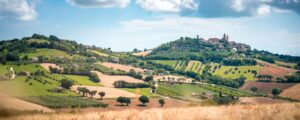
Leave the coast behind, and within minutes you are already among the olive groves.
Extra virgin olive oil from the Marche region has an ancient history. As early as the days of the Republic of Venice, it was prized for its aroma and sold at a premium compared to other oils—a tradition that continues today. Intense and fragrant, it is perfect drizzled over warm bread or simple dishes.
Alongside the olive oil, there are the wineries. The Marche region boasts dozens of wines across DOC, DOCG, and IGT classifications. You can choose from fresh, mineral-rich whites—perfect with seafood—and more full-bodied reds, ideal for pairing with meat and cured meats.
There is just one rule, however: stop, taste, and talk to the producers. You will be amazed by the many stories waiting to be heard!
Third stop: Campofilone and egg pasta
If you love homemade pasta, this is a detour you simply must take.
Maccheroncini from Campofilone—a village in the Piceno area—are a symbol of the Marche region’s culinary tradition. They are incredibly thin, almost delicate to the touch, and made using a simple recipe of durum wheat semolina and double the usual amount of eggs.
The result is a pasta that holds its texture remarkably well during cooking and pairs perfectly with rich sauces, as well as lighter dressings.
Fourth stop: the cheeses of Urbino and Talamello
In the Marche region, cheese is not just food; it is culture.
Casciotta di Urbino, for instance, was already prized during the Renaissance. Michelangelo is said to have been among its admirers; he owned three plots of land in Casteldurante—now known as Urbania—which ensured him an abundant supply of this cheese.
Then there is *formaggio di fossa*—aged underground and known as the “Amber of Talamello”—which boasts an intense, bold flavor that shifts dramatically depending on the length of aging.
And all along the Apennines, you will find a variety of pecorino cheeses, each telling the unique story of its specific territory.
Fifth stop: cured meats, tradition, and peasant ingenuity.
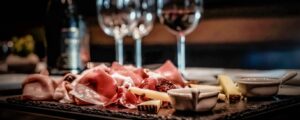
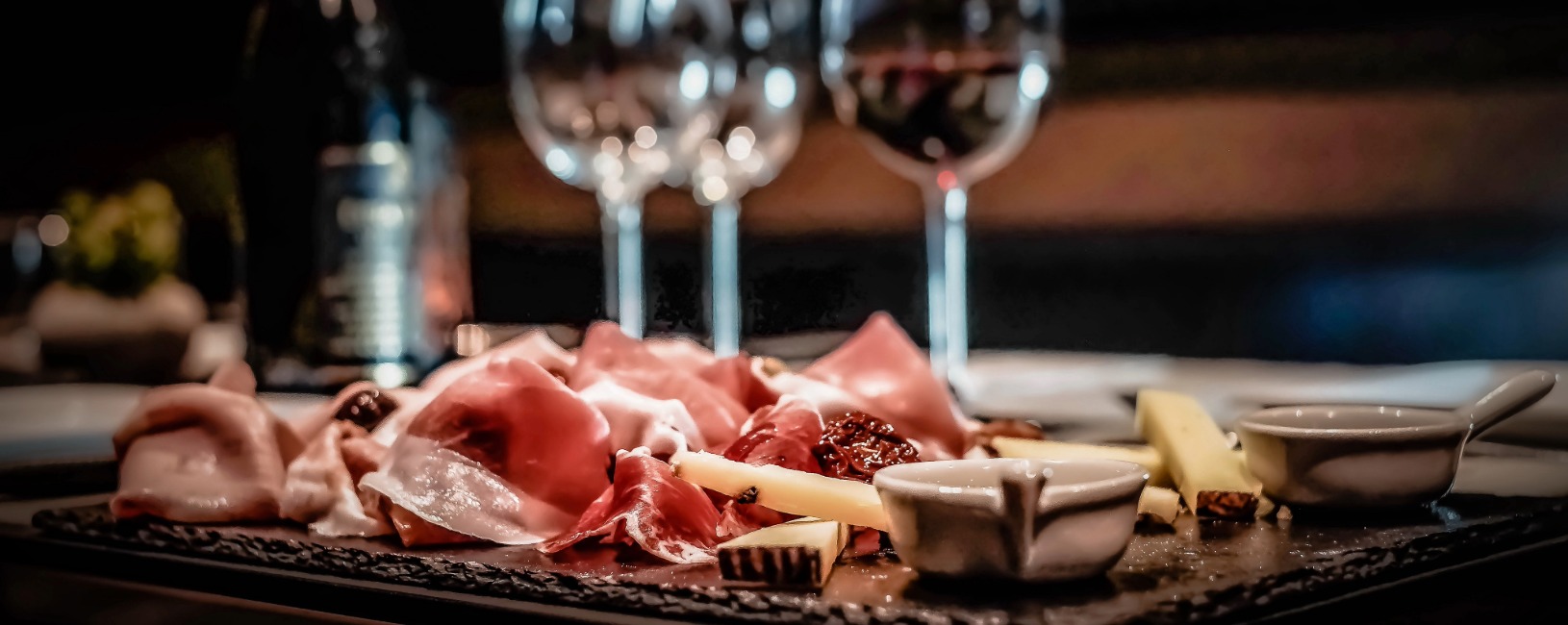
The cuisine of the Marche region is rooted in a philosophy of wasting nothing. The sharecropping tradition gave rise to cured meats such as ciauscolo—soft and spreadable—and salame di Fabriano. Further north, prosciutto di Carpegna represents a more “noble” variety, delicate and aromatic.
Every product tells a story shaped by necessity, the seasons, and the passage of time.
Sixth stop: truffles and meat from the hinterland
If you venture into the province of Pesaro and Urbino—exploring areas like Acqualagna (considered the truffle capital) or villages such as Sant’Angelo in Vado and Apecchio—you enter the very heart of this world.
Here, the truffle is everywhere: whether white or black, it always takes center stage. The most prized variety is the white truffle—intense and aromatic—capable of transforming even the simplest dish.
Alongside the truffle, you will find top-quality meats like the *Vitellone Bianco dell’Appennino Centrale* (PGI Central Apennine White Veal). This Italian culinary treasure is a staple of local grilled specialties and traditional dishes.
Seventh stop: sweets and honey
To finish things off, something sweet. Honey production is an ancient tradition in the Marche region. Among the most common varieties is millefiori (wildflower honey), which varies depending on the specific area and the blooms available.
It is perfect on its own or paired with cheeses for a memorable finale.
This itinerary starts in Senigallia but leaves plenty of room for curiosity. Stop at a winery you stumble upon, an olive oil mill, or a *trattoria* that smells inviting even from the street; then, as the day draws to a close, head back to your “Plan B” with a haul of stories and flavors—and the satisfying feeling of having chosen the right path.